Showing posts with label LS 5663. Show all posts

Tuesday, March 1, 2011

The Cuckoo's Haiku (A LS 5663 Review)


Rosen, Michael J. 2009. The Cuckoo’s Haiku and Other Birding Poems. Somerville: Candlewick. ISBN: 978-07636-3049-2.


     Research on children’s poetry preferences shows that haikus are one of the least favorite forms of poetry and that children prefer humorous poetry or poetry written about familiar situations (Vardell 75). With that research in mind, it is understandable that a book of haikus about birds may not interest young children. This collection of poems, marketed on Amazon as a book for children ages 4-8, did not break the mold that research found. The book is divided by the four seasons, and each haiku is devoted to one bird. In addition to the poem, there is side information about the bird. The side information is in a beautiful scroll type, which is difficult for young children, many of which do not know how to read or write cursive, to decipher. Struggling readers will not invest the time to read the small scroll. So, while the script adds to the whimsical pictures, it does not help students who are curious about the birds. While the pictures in the book are beautiful, vivid watercolors of unique birds and their surroundings, they lack appeal for young children.

     March brings the beginning of spring for those in Texas (April for the rest of the country), and for many, it’s the first chance in a long time to get outside and feel the warmth of the sun. The haiku entitled “Eastern Bluebird” reminds the reader that the birds are spring’s first song.

“On a staff of wires

Blue notes inked from April skies

Truly, spring’s first song” (Rosen 3).

     When spring brings those beautiful crisp afternoons, these poems make for a great break from the classroom. After reading this haiku, the students can take a break outside, enjoying spring’s first song, writing about the birds and sounds they hear. Seeing and hearing the birds can spark interest in writing about them, and although most kids do not enjoy haikus, maybe the same beautiful birds that inspired the author will inspire them as well.

Vardell, Sylvia. 2006. Poetry Aloud Here. Chicago: American Library Association. ISBN: 0-8389-0916-7.



At the Sea Floor Cafe (A LS5663 Review)


Bulion, Leslie. 2011. At the Sea Floor Café Odd Ocean Critter Poems. Atlanta: Peachtree. ISBN: 978-1- 56145-5652.


     The ocean and its creatures have always been a fascination for humans. Explorers have only investigated about five percent of the oceans, and man’s curiosity begs for more information. This compilation of poems by Leslie Bulion takes a look at the odd creatures that live under the sea. The eighteen poems explore fish, octopus, squid and other animals, focusing on the obscure and the different like the sea spiders and the coconut octopus. Next to each poem, there is a paragraph or two giving interesting information about the creature in the poem. Some of the paragraphs include the pronunciation of the more scientific words, which is helpful. The glossary in the back also helps readers understand words they may not have read before. The illustrations support the theme of ocean life, but they do little to reinforce the idea of the odd creatures. The typical drawings do support the idea of the critters described as being different or unique.

     What makes this book special is its eclectic style. Each poem is told in a different way: a triolet (eight-lined poem with just two rhyming sounds), free verse, lyrics, and a cinquain. The different rhythms and designs give the reader a broad range of poetry in which to read and, in the case of beginner writers, to imitate. In the back of the book, each poem’s style is explained, which gives a young writer an idea of how to write a similar poem.

     One of the poems that embodies the idea of the book (odd critters) with diverse poetry is “Dolphin Fashion,” a limerick.

A bottlenose counseled her daughter:

“Put this sponge on your beak underwater.

You can scare out more fish,

Poke sharp stones as you wish,

And your skin’ll stay smooth like it oughter” (Bulion 19).

     The additional paragraph explains how some dolphins near Australia have sponges on their noses. Researchers believe one mother started using the sponge to protect her nose while feeding on the ocean floor. Her babies imitated her, and a tradition began. The unique behavior of these dolphins is told lightheartedly in this limerick while exposing children to a new format for a poem.

     To demonstrate how poetry can be fun, a teacher or librarian can use the poem “Upside Down and All-Around,” which is about a snail. The words curve around in a circle, creating the image of a snail. After reading the poem and discussing how the set-up adds to the feel of the poem, students can pair up to write a poem about a favorite animal, twisting the words into the shape of the animal. Students who may not enjoy poetry may like putting the words into a shape, thus engaging them in poetry.

Tuesday, February 15, 2011

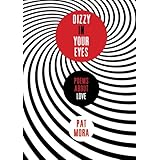
Dizzy in Your Eyes by Pat Mora (LS 5663 Review)

Mora, Pat. 2010. Dizzy in your Eyes Poems about Love. New York: Alfred A. Knopf.


Thoughts of love and relationships occupy the majority of a teenager’s time, and in this collection of poems about love, Mora describes the feelings of love teens have for family, friends, sports, and a boyfriend or girlfriend. Although most of the poems are written in free verse, some poems are sonnets, haikus, acrostics, and even a clerihew. While the poems are written for entertainment purposes, on the page opposite the poem, there is a brief explanation of the poem’s style for an interested reader.

While many see the teen years as life’s last chance to be carefree before embracing adulthood, teens deal with tough issues that Mora adequately expresses. In “Questions”, the narrator is afraid of his friend’s cutting. In “Pressure”, a girl is feeling the pressure to have sex with her boyfriend but is unsure of what to do. In “Kissing”, the teen girl learns the weight of having to carry herself now that her dad can’t carry her problems for her. Each poem conveys a different feeling and evokes a different personal response from the reader.

The poem “Doubt” sums up the fears all teens have, especially about love.

“What if guys think I can’t kiss because I can think?

What if I ask her out and she laughs?

Why are all the guys I know so short?

Why do girls like those handsome fakes

with fast cars and fat wallets?

Can I eat less and less until I’m transparent and shine?

Why do their eyes squint when we speak Russian?

Do boys really imagine all of us without clothes?

What if no one wants to touch me because I’m too fat?

Why do they start whispering about me when I walk by?

When I dance, why do my feet get stuck, as if music

is a foreign language?

Does anyone care about the real me?

Does my breath smell like a fish tank?

Why don’t they like him just because he’s Muslim?

What if the way I kiss is dull, like oatmeal?

Why do adults say, ‘What do you know about love?’

Why is my dog the only one who really understands me?

How does it feel to be married?

Why do my parents kiss in public?

If I sing better than she does, why don’t I get up there and sing?

Why do teachers all think I’m dumb as a garbage can?

What will it be like living far away in a dorm with strangers?

What if, when I leave,

I crumple

by myself?” (Mora 11)

Told through simple questions, Mora asks the questions all teens have wondered, from the superficial to the thoughtful to the insecure. Although the words lack the metaphors and rhythmic patters of some poetry, the honesty of the poem reflects teens’ fears.

The final poem “My Song” ends with every teen’s dream as they leave high school to move on to college.

“It’s still morning,

the spring of my life.

I’m starting my journey,

family and friends at my side,

my song inside,

and love as my guide.” (Mora 165).


Valentine’s Day, or the days leading up to it, is a great time to read and to write about love with teenagers. That’s what is on their minds anyway. “With Feeling” is an excellent poem to start off with. The narrator is annoyed with the piano teacher and the English teacher who urge him to play and to write with feeling. His response is, “Feeling? I am feeling. Don’t they see it shimmering on my skin, plain for all to see? I burn with feeling.” This poem can be a springboard for students to write about their own feelings.


Wednesday, February 2, 2011

City I Love by Lee Bennett Hopkins (LS 5663 Review)


Hopkins, Lee Bennett. 2009. City I Love. New York: Abrams Books for Young Readers. ISBN: 9780810983274.

     Young readers will catch the travel bug after reading this light collection of short poems about cities. Although the poems do not rhyme, the words create an image to match the topic as in the poem “Kite” where the kite “flitters, twirls, tumbles, twitters”. The words do not rhyme but instead give a visual of the kite floating in the air. Another technique the author uses to create imagery in the poems is how the poem is set up. In the poem “Snow City”, the word down is written in falling text to symbolize the falling flake.


     Each poem about the city could apply to any city in the world, but what makes each poem unique is its illustration by Marcellus Hall. The pictures are drawn in an almost cartoonish way with vivid but not bring colors. The pictures take the words to different places around the world: San Francisco, Japan, France, London, Mexico, and New York City. Adding the different countries to the words takes the reader out of their own city and takes them around the world. What unifies the poems is the hound that is visiting each place with his backpack. Students will enjoy looking for him on each page.

     Beginning as early as kindergarten, students are taught the difference between cities, towns, suburbs, and rural areas. This book supplements this curriculum, especially the first poem “Sing a Song of Cities” which asks the reader to sing to the city to hear what the city will sing back. “They’ll sing in subway roars and rumbles, People-laughs, machine-loud grumbles”. Students can discuss what sounds they hear in the city and then compare it to what they may hear in a rural country area. This enhances the state standards of knowing the difference between the country and the city by adding what the different sounds and smells they may find in the city and country.


Keeping the Night Watch by Hope Anita Smith (LS 5663 Review)


Smith, Hope Anita. 2008. Keeping the Night Watch. New York: Henry Holt and Company. ISBN: 9780805072020.

      Thirteen year old C.J. became the man of the house when his father walked out on the family. Now that his father is back, C.J. struggles to find not only his place in the family but also forgiveness for his father, who is doing everything in his power to make amends.


      Told in free verse poetry, this book tells the journey from fall to spring, from hate to forgiveness, and from separation to unity. The simple words are rich with figurative language. C.J. compares the family conversations to baking, his father's eyes to a white flag of surrender, and the family's security to fine bone-china. Although each poem could stand alone, woven together, they tell the story of a healing family. Offsetting the serious nature of forgiving a father who abandoned him, C.J. also describes his crush on Maya and his nervousness when he’s around her. The addition of these poems creates a balanced look at a teenage boy.

     The pictures, illustrated by E.B. Lewis, add fill in the blanks left by the simple words. The most compelling picture is the one for the poem entitled “Showdown at the O.K Corral”, which pictures C.J. and his father face to face, C.J.’s face angry and his father’s face determined. Another picture that speaks volumes accompanies the poem “Light at the end of the Tunnel”, which has a dark tunnel with C.J.’s father at the end in white, symbolizing C.J.’s secret hope that at the end, his father will be there as “our sun rising” (Smith 69).

      To introduce this book, “If You can’t Stand the Heat”, which epitomizes C.J.’s anger is a good place to start.

I am mad.

I am the worst kind of mad.

I don’t yell.

I don’t slam doors.

I don’t throw things.

I’m a pot with a lid on,

I keep all my mad inside.

I just let it stew.

I want Byron to be mad, too,

but he isn’t.

Says he doesn’t want to hold on to mad.

He takes the lid off his pot,

Lets mad go.

Says he wants his family back.

Says he’s glad Daddy’s home.

I’m mad at Daddy,

But it feels like I’m mad at Byron, too.

We’re two different kinds of pots,

Byron and me,

and when it comes to Daddy,

we can’t cook together. (Smith 16)

       Students can analyze the emotion, the simple sentence structure to convey anger, and the cooking metaphors and then compare it to the final poem “Dance with Me” where the family finally comes together when C.J. dances with his father. “We keep our eyes on Him. We dance on our tears” (Smith 73). After reading this poem, students could write in their Jammin’ Journals (journals written in response to music) after listening to the song “Dance with my Father” by Luther Vandross. The journal entries could compare C.J.’s feeling of forgiveness when he dances with his father and the song’s sorrow over his mother no longer being able to dance with his father.

Tuesday, February 1, 2011

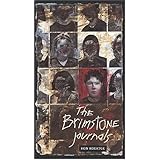
The Brimstone Journals by Ron Koertge (LS 5663 Review)


Kuertge, Ron. 2001. The Brimstone Journals. New York: Candlewick Press. ISBN: 0763613029

Branston High School, nicknamed Brimstone by its occupants, is a typical suburban high school in America. You have the jock, the nerd, the fat kid, the lesbian, and every other “label” high school students give each other. In The Brimstone Journals, Koertge gives readers a glimpse into the personal thoughts of each of these fifteen students by recording their thoughts and feelings in journal form.


What joins the students together, whether they know it or not, is Boyd, an angry young man with a list of “everybody who ever blew me off, flipped me off, or pissed me off” (Koertge 51). When he meets Mike, Boyd begins to plan a Columbine type event where he gets revenge against all those he thinks offended him. Other students are sucked into his plan either by joining in the attack or having their name added to the list. One student bravely thwarts Boyd’s plan, and the aftermath of the “event” showcases teenagers at their best: living in the moment. Although a few students have their lives changed like Sheila opening up to her mother about her struggle and Allison telling the counselor what her stepfather is doing to her, most students immediately go back to the frivolous cares of high school. Damon, the controlling boyfriend jock, immediately goes back to wondering when his girlfriend will come back to him. Rob still doesn’t understand why he was on the list. Even Lester, the hero of the book, contemplates his actions for a minute and then immediately thinks about going to prom with Meredith. Boyd exemplifies this even further as with one sentence he is choosing to help kill his peers and in the next, he’s thinking about a tattoo.

Boyd
I was gonna drop out of school until
Mike got me to see how we need
People who can lead the foot soldiers.
Somebody the grunts can look up to.
So I’ll march up there and shake some total
phony’s hand.
Plus, Mike’s springing for a tattoo when I
get my diploma.
(Koertge 31)


Although Koertge gives a voice to the average high school students in this book, the book felt incomplete in some way. Because there were fifteen voices to hear in only 113 pages, some voices were not developed completely nor did their few entries do their stories justice. However, the many voices join together cohesively to tell the unified story of a high school on the edge of an attack by one of its students. Each unique voice tells a different side or perspective of the story that the reader would not have seen if the story had been written in standard prose. The pattern of the poems (some one sentence in length while others two pages) resonates the disjointed feelings of teenagers.


Each day, millions of teens around the country go to school with different problems and situations in which they feel isolated and alone. In this book, Koertge gives them a voice. Before reading the book, a history, psychology, or English teacher could have an introduction lesson using articles out of today's newspapers and magazines about students committing violent acts at school. The events in recent history make the book relevant to today's teen. Because the poems are short and the book a fast read, the teacher should read the whole book with the class in order to see the full ramifications of the character's action.  In addition to great discussions about life, fitting in, and isolation, the poems lend themselves to discussions about character traits, development, and change throughout a story. Comparing the change in Allison to the lack of concern by Rob clearly shows character development and the lack of it. Finally, students can then write about their own struggles and perhaps even get some help if they need it.